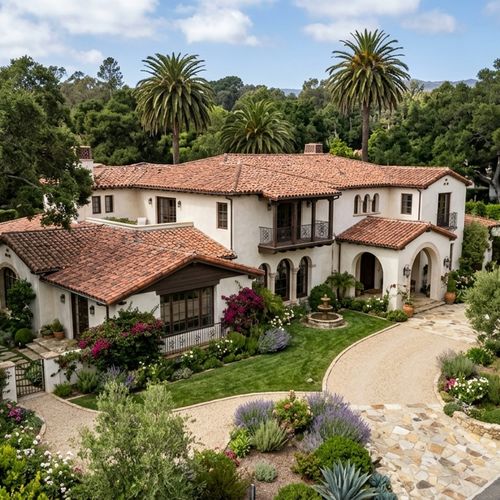
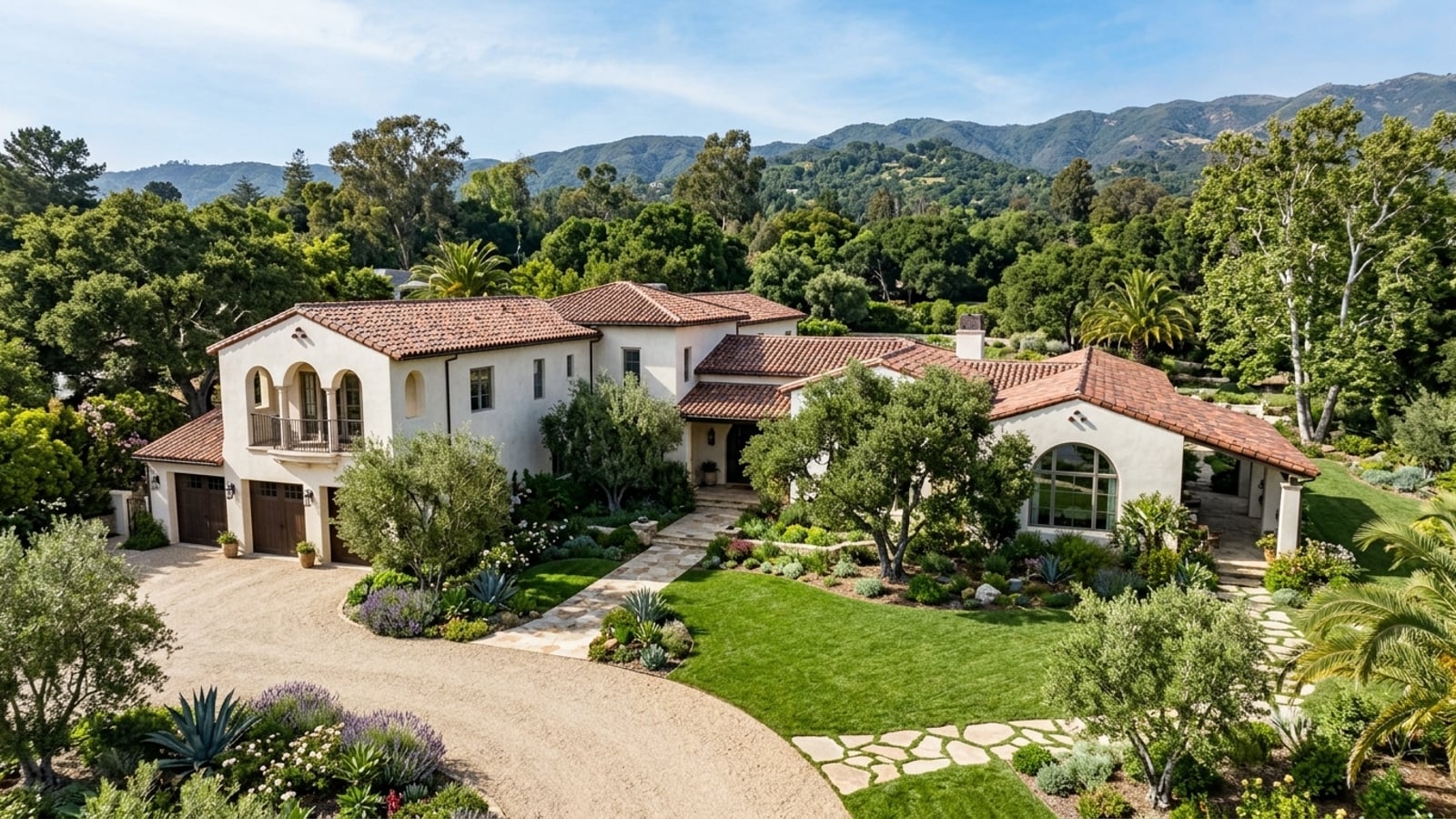
The median sale price for a home in Montecito, CA sits around $5.7 million, with properties spending roughly 89 days on the Montecito housing market. Most buyers zeroing in on that number - and on a sale-to-list ratio of 96.2% - spend a lot of energy on the purchase price and not nearly enough on what it costs to own the place afterward. That's a gap worth closing before you're in contract.
California's tax structure makes this calculation different from almost anywhere else. Under Proposition 13, your annual bill is anchored to your purchase price, not to whatever the market decides your home is worth next year. Understanding exactly how those rules play out in Santa Barbara County will let you model your monthly carrying costs accurately - before you sign anything.
Current Property Tax Rates in Montecito
Montecito falls under Santa Barbara County, which carries an average property tax rate of roughly 1.20%. California's constitution caps the base rate at 1% of assessed value statewide, so anything above that 1% floor comes from voter-approved local bonds layered on top.
Montecito is an affluent unincorporated area, and effective rates in the 93108 ZIP code tend to run higher than the county median. That's not a quirk - it's a straightforward consequence of elevated home values combined with local bond measures that fund community services and schools.
Comparing Montecito to Santa Barbara County and State Averages
California's overall effective property tax rate on owner-occupied housing is 0.70% statewide. Santa Barbara County's 1.20% average comes in slightly below some state-level estimates of 1.25%, though those figures shift depending on the methodology behind them.
If you're buying in Montecito, plan to pay a bit more than the statewide effective average. Local overrides plus premium real estate prices push the total burden above what you'd see in less expensive parts of California.
How Rates Change Year Over Year
The base rate stays fixed at 1% of assessed value - that part doesn't move. What can move is the assessed value itself, but only by a maximum of 2% per year, regardless of how much the market appreciates.
That cap keeps your tax bill relatively stable from one year to the next. The only meaningful jumps happen when voters approve new local bonds or parcel taxes, which get added on top of the base rate.
Calculating Your Montecito Property Tax Bill
Your purchase price establishes your initial assessed value - that's where the calculation starts. Buy at the median of $5.7 million, and that figure becomes your tax baseline.
From there, you apply the 1% base rate and add any voter-approved bonds specific to your parcel. On a $5.7 million home, the 1% base alone equals $57,000 a year - before a single local charge is added.
Assessed Value Versus Market Value
These are two completely different numbers in California, and confusing them is an expensive mistake.
Your assessed value is locked in at purchase and can only rise 2% annually under Proposition 13. Your market value is what the home would sell for today. A homeowner who bought a Montecito estate twenty years ago carries an assessed value - and a tax bill - that looks nothing like what a buyer purchasing that same home in 2026 would face.
Base Rates and Voter-Approved Bonds
The 1% base is universal across California. The local bonds are not - they vary by neighborhood and school district, and they fund infrastructure, schools, and emergency services in Santa Barbara County.
Ask the seller for a copy of their most recent tax bill before you close. That document shows you the specific bonds attached to the parcel - the fixed overrides you'll be assuming the moment title transfers.
Estimating Your Taxes by Home Value
Getting a precise number before closing requires looking at the specific parcel. Properties in the 93108 and 93150 ZIP codes - and some parts of 93103 - can carry different local assessments, so there's no single figure that applies across all of Montecito.
For early budgeting, plan for an effective rate slightly above 1% of your purchase price. That gives you a workable estimate, but only the actual parcel data will get you to an exact figure.
Using a Property Tax Calculator
Online calculators are useful for a rough first pass. You enter your expected purchase price, the tool applies the county average, and you get an approximate annual cost to work with.
The limitation is that most of these tools default to the Santa Barbara County average of 1.20% and won't capture the specific local overrides attached to an individual Montecito estate. Treat the output as a floor, not a ceiling.
Looking Up Taxes by Address or ZIP Code
The most accurate approach is looking up the current tax records for the specific address you're considering. You'll see the exact itemized bonds and parcel taxes currently applied to that property.
The bonds stay the same, but the base assessed value resets to your purchase price at closing. So you calculate the new 1% on what you paid, then add the existing bonds from the current bill to arrive at your future number.
Sales Tax Rates in Montecito
Property taxes aren't the only local levy worth understanding. Montecito residents also pay a combined sales tax rate that includes the California state base plus county-level additions.
Because Montecito is unincorporated, there's no additional city-level sales tax on top of the county and state rates. You pay the standard Santa Barbara County rate for local goods and services - no more, no less.
Combined Sales Tax Breakdown
What you pay at the register combines the statewide base rate with local district taxes. Those district taxes fund transportation, public safety, and other county-wide initiatives.
The combined rate applies consistently to retail purchases throughout the unincorporated county boundaries - whether you're buying home goods or having dinner locally.
Sales Tax Differences Across Local ZIP Codes
Montecito spans primarily the 93108 and 93150 ZIP codes, with some overlap into 93103. Sales tax rates are generally consistent across those areas because they all fall under the same Santa Barbara County jurisdiction.
Cross into the incorporated city of Santa Barbara, though, and the rate changes. The city levies its own district taxes that don't apply to purchases made within Montecito.
How to Pay Your Santa Barbara County Tax Bill
Property taxes in Montecito are collected by the Santa Barbara County Treasurer-Tax Collector. The county issues secured property tax bills annually, and the responsibility for making sure they're paid on time is yours.
If you have a mortgage, your lender almost certainly handles this through an escrow account - you fund it monthly and they cut the checks. If you own outright or manage your own taxes, you'll submit payments directly to the county.
Finding Your Property Tax Records Online
The Santa Barbara County Treasurer-Tax Collector's official portal lets you search by property address or Assessor's Parcel Number (APN). Your bill, payment history, and current assessed value are all there.
These records are public, which means you can look up the tax history of any home you're considering before you make an offer. The portal will show you the current assessed value, itemized bond charges, and whether any past payments are delinquent.
Important Due Dates for California Taxpayers
California property taxes are paid in two installments. The first is due November 1 and becomes delinquent after 5:00 p.m. on December 10. The second is due February 1 and becomes delinquent after 5:00 p.m. on April 10.
Missing either deadline triggers immediate penalties. Put these dates somewhere you'll actually see them.
Exemptions and Ways to Lower Your Tax Burden
California has a handful of programs that can meaningfully reduce your property tax exposure. They range from the standard homeowner's exemption - which lowers the assessed value on your primary residence - to specific exemptions for veterans and disabled veterans that cut the annual liability further.
These aren't obscure loopholes. They're programs worth knowing about before you assume your bill is fixed.
Proposition 19 Transfers for Seniors
Under Proposition 19, homeowners age 55 and older can transfer their Proposition 13 base year value to a replacement home anywhere in California. Eligible homeowners can use this benefit up to three times.
For someone who's owned a home in California for decades and is looking to move to Montecito, this can be a significant advantage - you bring your lower tax base with you rather than starting fresh at today's purchase price.
Appealing Your Santa Barbara County Assessment
If you believe your home's assessed value has climbed above its actual current market value, you can file an appeal with Santa Barbara County. This most commonly comes up during market downturns, when values drop below what someone originally paid.
The county assessor reviews the market data and may reduce your assessed value temporarily. When conditions recover, the assessed value can be restored up to its original Proposition 13 limit - but you're not penalized retroactively for the period it was lower.
Taxes on New Construction and Special Assessments
Buying in a newer development or modifying an existing home can create additional tax exposure. Santa Barbara County assessors track building permits and use them to identify properties that need reassessment because of new construction.
Special assessment districts are the other thing to watch for. These add fixed annual charges to your tax bill and are formed to fund specific local infrastructure projects.
How New Builds and Remodels Are Taxed
Add square footage, build an accessory dwelling unit (ADU), or complete a major remodel, and the county will reassess the value of that new construction and add it to your existing base year value. Your total assessed value goes up; so does your annual bill.
Routine maintenance and minor repairs don't trigger a reassessment. The line is drawn at improvements that materially change the property.
Mello-Roos and Community Facilities Districts
Mello-Roos taxes are special assessments used to finance local infrastructure - roads, schools, utilities - and they're billed alongside your standard property taxes. They're less common in Montecito's established historic estates, but if you're looking at newer subdivisions in Santa Barbara County, you'll want to check for Community Facilities District (CFD) charges. These assessments can add thousands of dollars to your annual carrying costs, and they're not always visible in the listing.
How Montecito Compares to Nearby Areas
The 1% base rate is universal, but local bonds and median home prices create very different total tax burdens depending on where you buy in California.
Montecito's high property values mean that even at a rate close to the county average of 1.20%, the raw dollar amount homeowners pay is substantial. The percentage may look familiar; the check you write is not.
California Towns With the Highest Taxes
Areas with the highest effective rates tend to be newer suburban communities that needed to finance their own development - extensive infrastructure projects, new school bonds, multiple Mello-Roos districts. In those markets, the effective rate can climb well above the 1.20% Santa Barbara County average.
Buyers in those markets pay a premium for new roads, parks, and utility expansions - often without realizing it until after closing.
Areas With Lower Property Tax Burdens
California's overall effective rate of 0.70% reflects communities with minimal local overrides - older infrastructure, fewer voter-approved bonds, no special assessment districts. The trade-off is usually fewer local services and community amenities.
If minimizing the tax rate is the priority, those areas exist. But the lowest rate and the best fit for your situation aren't always the same address.
Frequently Asked Questions
What is the standard property tax rate in Montecito, CA, and are there additional local parcel taxes?
Yes, Montecito falls under California's base rate of 1% of the assessed value, plus voter-approved local bonds. While no specific rate is published just for Montecito, the Santa Barbara County average is roughly 1.20%.
How long after closing on a Montecito home will I receive the supplemental property tax bill?
It depends on when the Santa Barbara County Assessor processes the change in ownership. Because your new assessed value is based on your purchase price, the county will issue a supplemental bill to cover the difference between the seller's old tax base and your new one.
Can I transfer my current California property tax base to a new purchase in Montecito under Proposition 19?
Yes. Rather than paying taxes based on Montecito's current market values, qualifying buyers retain their original assessed value. You can execute this transfer up to three times.
Will building an ADU or doing a major remodel trigger a full property tax reassessment on my Montecito estate?
No, it will not trigger a full reassessment of the entire property. The Santa Barbara County Assessor will only assess the value of the new construction, which is then added to your existing base year value.
How are property taxes prorated between the buyer and seller during a Montecito real estate closing?
It depends on the closing date relative to California's tax due dates of November 1 and February 1. The escrow company will calculate the exact number of days each party owns the home during the tax cycle and divide the bill accordingly.
What steps do I take with Santa Barbara County to appeal my property taxes if my Montecito home's market value declines?
You must file a formal appeal with the Santa Barbara County Assessor's office. If the current market value of your home drops below its Proposition 13 assessed value, the county can temporarily reduce your tax burden.
Check out this article next