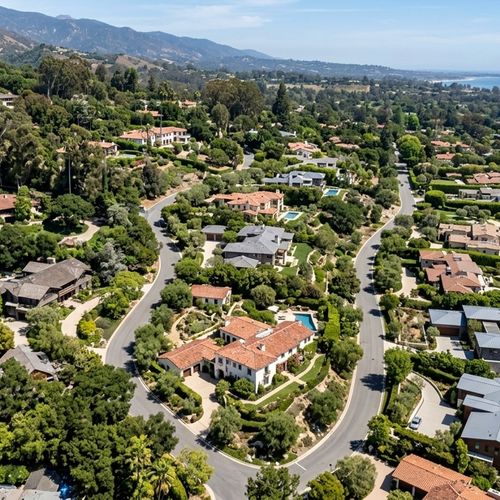
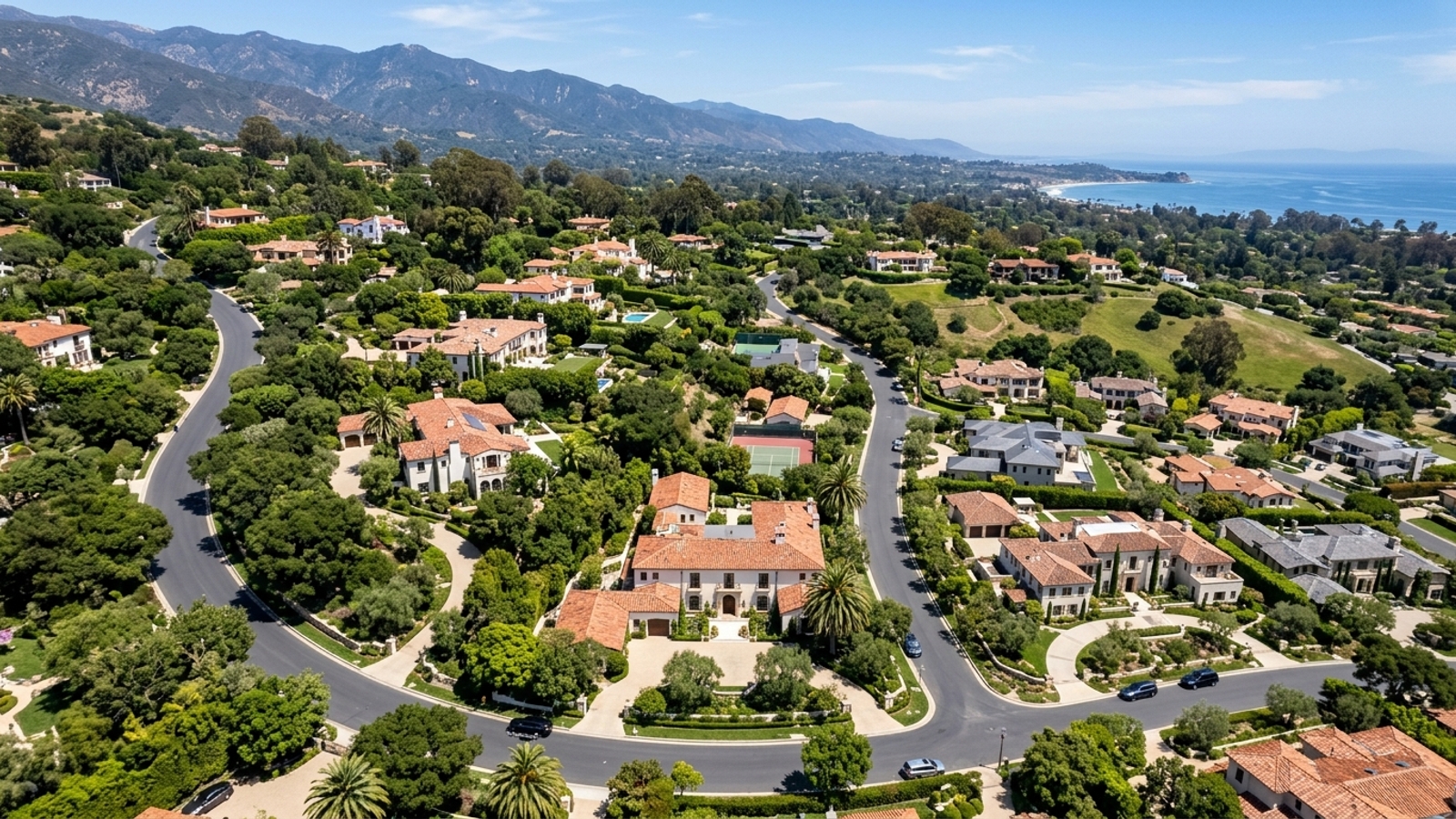
The median sale price for a home in the Montecito, CA housing market sits around $5,700,000 as of mid-2026. That number alone tells you this isn't a typical rental market - the math works differently here, the buyers are different, and the reasons to own are different. Properties spend a median of 89 days on the market, which at least gives you time to think.
If you're coming from a market where you run cash-flow numbers and look for a cap rate, you'll need to reset your framework. Investors here focus on equity growth, high-end month-to-month rentals, and capital preservation in a coastal enclave that has historically rewarded patience over yield.
Is Montecito a Good Place for Real Estate Investment?
As of spring 2026, there are about 61 homes available in Montecito. During the most recent tracking period, buyers purchased 13 properties, with homes selling at an average of 96.2% of list price. About 7.6% of those sales went above asking - so well-priced properties still draw real competition, even at this tier. With 4.7 months of supply, you're looking at a market that leans balanced, maybe just barely toward buyers. That's enough room to negotiate without the frantic bidding that tighter inventory creates.
Current Prices and Market Pacing
The median home price of $5.7 million represents a 22% year-over-year decrease from the previous spring. For buyers who felt priced out during the peak, that's a meaningful shift. The 89-day median time on market is worth taking seriously if you're planning to flip or resell - budget for a three-month listing period, not six weeks.
At this price point, the pace of the market actually works in your favor on the buy side. You have time for thorough inspections and deliberate financing decisions. On the sell side, accurate pricing matters more than it does in hotter markets; a listing that sits too long starts to carry a stigma that's hard to shake.
Buyer's vs. Seller's Market Dynamics
Six months of supply is generally considered neutral, so Montecito's 4.7 months keeps things roughly balanced - with a slight lean toward buyers. That distinction matters in how you approach an offer.
Properties that have been sitting at or past the 89-day median are worth targeting. Sellers with aging listings tend to show more flexibility on price or terms than they would have on day one. That said, a turnkey property in a prime location will still command near-list offers. Don't expect the market data to override a genuinely desirable asset.
Market Data for Montecito Investors
Montecito covers 9.2 square miles with a population of roughly 9,031 residents, according to recent Census data. Population grew 9.5% between 2019 and 2024, though recent estimates show a slight annual decline of 0.12% - about 983 people per square mile. It's a small, stable, low-density community, and that's by design.
Property taxes here operate under California's Proposition 13 assessed-value-based system rather than a flat county rate. In 2024, the median real estate property taxes paid for mortgaged housing units in Montecito were $10,426, landing at an effective rate of about 0.4%. That's a relatively low effective rate for what you're paying, but the absolute dollar amount still factors into your carrying costs.
Rental Rates and Returns
Typical monthly rent in Montecito runs approximately $16,250, which produces a price-to-rent ratio of 26.9x. Zumper reported average rents as high as $27,000 per month as of July 2026. Either way, the ratio strongly favors renting over buying for primary residents - which is actually good news for investors, since it sustains demand for luxury leases.
Here's the honest math, though: rents between $16,250 and $27,000 per month don't cover the carrying costs on a $5.7 million mortgage without a very substantial down payment. Investors buying at the median price generally accept that monthly cash flow isn't the point. Long-term appreciation is.
Population and Migration Trends
The population growth from 2019 to 2024 brought new wealth into the market. The current slight decline looks more like stabilization than retreat - Montecito remains a destination for high-net-worth individuals relocating within California.
Those migration patterns are worth watching when you're planning updates to a rental property. Homes that reflect the tastes of incoming luxury buyers tend to lease faster and push toward the higher end of that $16,250 to $27,000 monthly range.
Strategies for Montecito Investment Properties
The 1% rule and 2% rule are benchmarks most investors know: a property should ideally rent for 1% (or 2%) of its purchase price each month. A $5.7 million home would need to rent for $57,000 a month to hit the 1% threshold. With average rents between $16,250 and $27,000, you're nowhere close. These formulas simply don't translate to this market, and applying them will lead you to the wrong conclusions.
That doesn't mean Montecito is a bad investment. It means you need a different framework.
Buy-and-Hold Rentals
Buy-and-hold is the dominant strategy here, and asset preservation drives the logic. Montecito's median home price climbed 76% from 2019 to early 2025 - that kind of historical appreciation makes the property itself the investment, not the monthly rent check.
Tenants in this segment tend to be executives, celebrities, or families mid-renovation on their own local homes. They expect premium finishes, genuine privacy, and responsive property management. Budget accordingly. Deferred maintenance on a property at this price point doesn't just create headaches - it erodes value fast.
Flipping and Traditional Rules of Thumb
The 70% rule guides most house flippers: pay no more than 70% of after-repair value minus repair costs. Finding a Montecito property priced low enough to make that math work is rare given the 96.2% average sale-to-list ratio. Flippers who operate here tend to focus on value-add opportunities - minor layout improvements or high-end cosmetic updates that push the finished product to a new price ceiling.
The 3-3-3 rule is another common benchmark: save 3% for a down payment, 3% for closing costs, and three months of mortgage payments in reserve. On a median-priced Montecito home, 3% down is $171,000 - but most luxury lenders require at least 20%. Plan for significant upfront capital before you're even in the room.
Short-Term and Month-to-Month Rentals in Montecito, CA
Santa Barbara County banned short-term rentals in Montecito's inland residential zones in 2017. The County Board of Supervisors made that call following a unanimous vote by the Montecito Planning Commission, which favored an all-or-nothing approach specifically to simplify enforcement. If you're an out-of-state investor hoping to list a vacant property on Airbnb, the inland residential zones are off-limits for stays under 30 days.
The narrow exception is a "homestay" arrangement, where the owner or a long-term tenant remains on-site during the rental. That's a real constraint worth understanding before you make an offer with a short-term rental strategy in mind.
Furnished and Month-to-Month Options
The workaround most investors use is furnished month-to-month rentals. Leases of 30 days or more fall outside the county's short-term rental restrictions, which opens a real niche - extended coastal stays, professionals on temporary assignment in the Santa Barbara metro, and similar demand.
Furnishing a luxury rental at this level requires a meaningful upfront investment. Done well, it supports premium monthly rates and keeps the home reasonably available for the owner's occasional personal use.
Operating Within Local Regulations
The 2017 ban applies specifically to inland residential zones, so property lines actually dictate what you can legally do. Before you buy with any rental strategy in mind, pull the Santa Barbara County zoning maps and confirm exactly where the parcel sits.
The county enforces its short-term rental ordinances actively. Fines are real, and compliance isn't optional.
Finding and Financing Montecito Investments
Commercial real estate and multi-unit properties are sparse in Montecito. The area is almost entirely single-family estates, so investors looking for that kind of diversification typically expand their search into neighboring Santa Barbara, where zoning accommodates a wider variety of property types.
With only 61 active listings, off-market relationships matter more here than in most markets. Building connections with local agents, lenders, and other investors is a practical strategy - not a platitude.
The Santa Barbara Real Estate Investors Association
The Santa Barbara Real Estate Investors Association (SB REIA) is the main organized networking resource in this market. The group emphasizes education for real estate investors at the local, national, and global levels, offers free membership, and provides access to educational videos and video chat sessions.
SB REIA holds regular meetings at the Marriott Residence Inn in nearby Goleta. It's one of the few National REIA-affiliated chapters in California, operating alongside chapters in Los Angeles and San Diego. If you're new to the market, this is a reasonable place to start building local contacts.
Financing and Property Devaluation Factors
Financing a $5.7 million purchase means jumbo loans or private portfolio lenders. Underwriting at this price point is thorough - expect to produce extensive documentation and be prepared for scrutiny of the property's condition. Deferred maintenance on a luxury estate can translate to six-figure deductions in value.
Beyond condition, certain location factors devalue Montecito homes and can't be fixed with a renovation budget: outdated floor plans, lack of privacy, proximity to busy roads. A dated home on a quiet, private lot is a better candidate for capital investment than a well-appointed property with a fundamental location problem.
Frequently Asked Questions
Do Montecito luxury homes typically generate positive cash flow, or are they primarily for long-term equity appreciation?
Primarily long-term equity appreciation. With a median home price of $5.7 million and average rents ranging from $16,250 to $27,000, positive monthly cash flow is unlikely without a very large down payment.
Can I legally rent out an investment property in Montecito as a short-term Airbnb or vacation rental?
No - not unless the property qualifies as a homestay. Santa Barbara County banned short-term rentals in Montecito's inland residential zones in 2017, and the exemption requires the owner or a long-term tenant to remain on-site during any short-term lease.
What do out-of-town investors need to know about securing fire and mudslide insurance in Montecito?
It depends on the property's specific location and topography. Consult local insurance brokers during due diligence to determine exact coverage requirements and premium costs for the specific address you're considering.
Is it better to invest in Montecito or neighboring Santa Barbara for consistent year-round rental income?
It depends on your available capital and rental strategy. Montecito offers high-end luxury leases and strong historical appreciation, while Santa Barbara provides a wider variety of commercial properties and lower entry price points.
How can buyers get access to off-market or pocket listings in the highly exclusive Montecito market?
Network with local professionals and look into groups like the Santa Barbara Real Estate Investors Association (SB REIA). Building relationships with established local agents is the most direct path to hearing about properties before they hit the open market.
How do supplemental property taxes and local parcel taxes affect the carrying costs of a Montecito estate?
California operates under the Proposition 13 assessed-value-based system. In 2024, the median real estate property taxes paid for mortgaged housing units in Montecito were $10,426, representing an effective rate of about 0.4% - factor that into your holding cost projections from the start.
Check out this article next