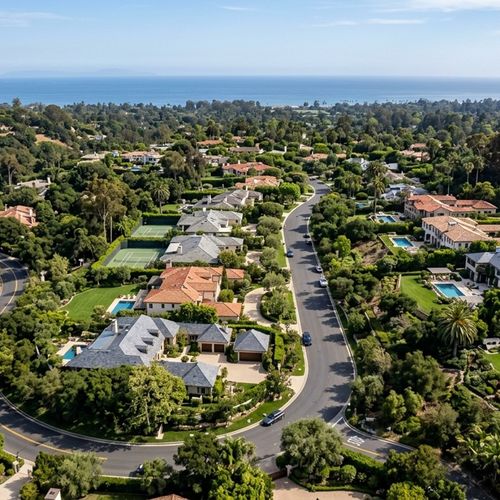
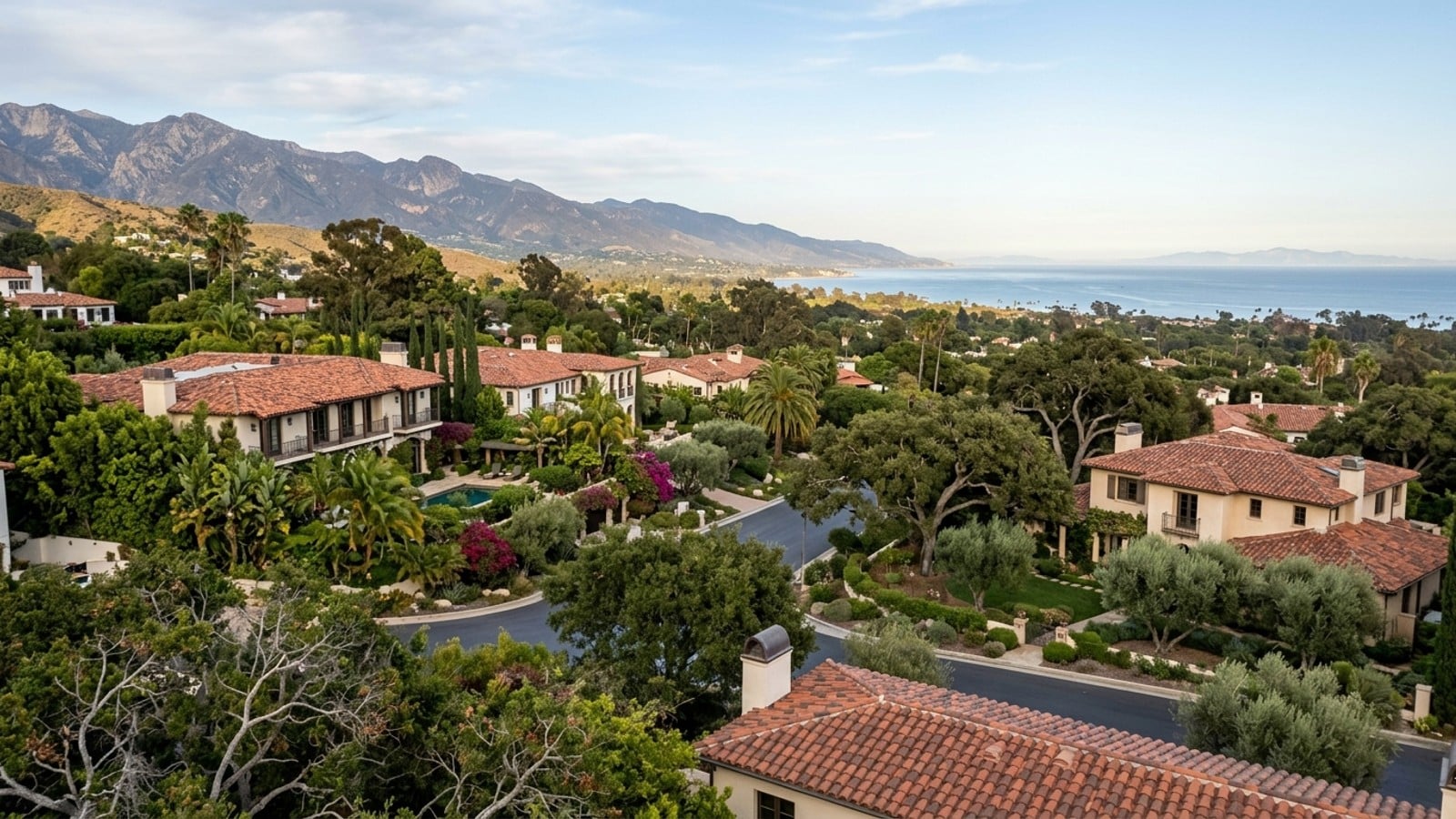
Montecito's median home sale price sits around $5.7 million, with properties spending roughly 89 days on the market. If you're seriously considering living in Montecito, the climate isn't just background color - it's a real factor in everything from what you'll pay for insurance to how you'll design a drainage system for a sloped lot.
The area is temperate, no question. But temperate doesn't mean without complexity. Right now there are about 61 homes on the market, and buyers who understand the seasonal patterns - not just the sunny afternoon pitch - will make better decisions than those who don't.
Understanding the Montecito Climate Zone
Montecito sits in a warm-summer Mediterranean climate zone, classified as Köppen Csa or Csb - common along California's south-central coast. What that means in plain terms: mild, wet winters and warm, dry summers.
The Pacific Ocean and the Santa Ynez Mountains do most of the work here. Ocean breezes keep summer heat from building the way it does inland, and the mountains block colder air from pushing through in winter. The result is a genuinely narrow temperature range, without the wild swings you'd see in other parts of the state.
Daily Temperature Ranges
Across the year, temperatures typically run from 42°F to 78°F. It's rare to drop below 34°F or climb above 84°F in the main residential areas. That kind of consistency is why you see so many open-air home designs and year-round outdoor living spaces here - they actually make sense.
Nights cool off noticeably even in summer. Most residents get by with layers rather than serious heating or cooling systems. The coastal marine layer rolls in most evenings and burns off somewhere around mid-morning.
Seasonal Weather Patterns
The hottest stretch runs from late August through September, with average highs around 78°F to 79°F. September nights average around 61°F - comfortable enough that you won't be running the AC all night.
Winter shifts things considerably. December and January are the coldest months, with daytime highs between 63°F and 66°F and overnight lows near 40°F to 46°F. It's not harsh by most standards, but it's not summer either.
Spring and Fall Transitions
Spring warms gradually once the winter rains wind down, and the skies tend to clear nicely. The catch is the marine layer - "May Gray" and "June Gloom" are real phenomena here. Mornings can stay overcast well into late spring before the sun breaks through by afternoon.
Fall is effectively a continuation of summer, with warm days running well into October. It's also when dry offshore winds become a concern. Those winds can push temperatures up sharply and pull humidity down fast, which matters considerably when you're thinking about fire risk.
Precipitation and Humidity Levels
Montecito averages about 18 inches of rain per year - well below the national average of 38 inches. Almost all of it arrives in winter. January is the wettest month at roughly 95 millimeters; August is the driest at less than 1 millimeter. Snow doesn't happen in the residential neighborhoods - zero inches annually, zero days with ground cover. If there's snow anywhere nearby, it's up in the Santa Ynez Mountains.
Humidity Throughout the Year
Relative humidity ranges from about 56.7% in January to 71.8% in August. It doesn't feel oppressive even at the higher end - the air stays below 60% humidity for roughly 51.7% of days annually. The summer moisture is tied mostly to that morning marine layer. Once the fog clears, afternoons feel genuinely dry, which is part of why the late-summer heat reads as more manageable than the raw numbers might suggest.
Natural Hazards and Weather Risks
This is where I'd ask you to slow down and pay attention. Between December 2017 and March 2018, Montecito was evacuated five times in four months. The Thomas Fire came first, then flooding from a Pineapple Express atmospheric river, then the 2018 Southern California mudflows - all in sequence, each one compounding what the last had left behind.
The mudflows resulted in 20 reported deaths, 28 injuries, and at least four people reported missing. The mechanism was straightforward and brutal: heavy winter rains hit hillsides that the Thomas Fire had stripped bare. There's ongoing mitigation work, including a 2020 FEMA grant of $13.5 million to the Santa Barbara County Flood Control District toward an $18 million debris-flow control project along San Ysidro Creek.
That history matters. It's not ancient history, and it's not resolved history. It's context you need when you're evaluating a property here.
Wildfire Threats
Wildfire risk doesn't go away in the off-season - it just shifts. Dry summer and fall conditions keep the foothills in a persistent state of vulnerability, and the Thomas Fire showed how fast that can escalate. If you're looking at anything near the urban-wildland interface, you'll want to pull the fire hazard severity zone designation for that specific parcel.
Defensible space clearing isn't optional on many of these properties - it's a requirement. Insurance carriers scrutinize wildfire exposure carefully when writing policies in the foothills, and that scrutiny shows up in your premiums. Factor both the maintenance cost and the insurance cost into your budget before you fall in love with a view lot.
Timing Your Move and Exploring Real Estate
With 89 days on market and a median sale price of $5.7 million, you're not in a situation where you need to rush a decision. The market currently carries about 4.7 months of supply. Use that time. Specifically, use it to see properties in more than one season.
Sellers tend to list in spring - the landscapes look their best, the afternoons are clear, and the marine layer hasn't fully settled in yet. But activity doesn't stop in winter, and the mild year-round climate means you'll find inventory across the calendar. Properties with ocean views often photograph and show best in the fall, when the marine layer backs off.
Evaluating Properties in Different Seasons
A January or February visit tells you things a spring tour won't. You can watch how a sloped lot handles water, whether the drainage system is doing its job, and whether the roof and windows are holding up against actual rain. On a property near a hillside, that's not a minor point.
Come back in late summer - September is ideal - and you'll see the other end of the spectrum. How does the home manage heat and sun exposure? Is there natural ventilation, adequate shade, effective air conditioning? Seeing it in the hottest local conditions removes the guesswork.
Frequently Asked Questions
When is the best time of year to list a home in Montecito considering the local weather?
Spring and early fall are generally the strongest listing windows. Clear skies and mild temperatures show outdoor living spaces well, and early fall sidesteps the heavy morning marine layer that hangs around in May and June. That said, the mild climate keeps real estate active year-round - a winter listing isn't a concession, it's just a different audience.
How do Montecito's seasonal wildfire and mudslide risks impact the home buying process?
These risks require real due diligence during escrow, not just a passing look. You'll want to review hazard disclosure reports to determine whether the property falls in a designated fire hazard severity zone or sits in a historical debris-flow path. Your lender and your insurance carrier will be asking those same questions - it's worth having the answers before they do.
Will the local climate and fire hazard zones in Montecito affect my homeowners insurance rates?
Yes. Homes in or near the Santa Ynez mountain foothills regularly face higher premiums because of wildfire exposure. The compound disaster history - the Thomas Fire, the subsequent mudflows - has made insurers cautious about this specific area. Get insurance quotes early in the process, before you're committed.
Are there different microclimates between beachfront properties and the foothills in Montecito?
There's a real difference. Beachfront properties get more consistent marine layer fog and cooler summer temperatures. The foothills run warmer and sunnier during the day, but they're also more exposed to dry offshore winds in the fall - which circles back to fire risk. It's not a trivial distinction when you're deciding where in Montecito to focus your search.
Should I get specialized property inspections for weather-related wear and tear in Montecito, CA?
Yes - particularly for drainage systems, retaining walls, and roof integrity. Nearly all of Montecito's 18 inches of annual rainfall arrives in winter, so water management on a sloped lot is a serious concern. A standard home inspection won't necessarily cover hillside geological stability. Bring in specialists.
How does the coastal marine layer affect property viewings and natural light in Montecito homes?
A morning showing in May or June can make a home look darker and cooler than it actually is most of the day. The fog typically clears by mid-morning or early afternoon, and then the light is completely different. Visit at multiple times of day. What a home feels like at 10 a.m. and what it feels like at 2 p.m. can be two very different experiences.
Check out this article next