Montecito real estate doesn't do anything at a modest price point. The median home sale price sits around $5,700,000 as of mid-2026, roughly 61 homes are available at any given moment, and properties take about 89 days to sell on average. If your plans for living in Montecito involve downsizing or moving into specialized housing, you're working within one of the most compressed, expensive markets in the state.
Finding a dedicated senior facility within Montecito itself requires knowing exactly what the town actually has - because the answer is narrower than most buyers expect. The broader Santa Barbara metro opens things up considerably, but Montecito's own inventory is concentrated and almost entirely at the luxury end.
Overview of 55+ and Senior Living in Montecito
The primary senior community physically located within Montecito is Casa Dorinda, a LifeCare Continuing Care Retirement Community (CCRC) at 300 Hot Springs Road. If you want more options - different price points, different care models - neighboring Santa Barbara adds facilities like Vista Del Monte and Valle Verde to the picture.
These aren't interchangeable. They serve different stages of aging and very different budgets, and which one makes sense for you depends on your current health, your long-term care preferences, and what you can actually sustain financially.
Available Community Types
Montecito and the immediate surrounding area cover the full spectrum: independent living, assisted living, memory care, and skilled nursing. A LifeCare CCRC pulls all of those levels onto a single campus, so residents can move between care tiers without having to relocate entirely.
Standalone independent living facilities lean toward social programming and dining services rather than medical support. Assisted living and memory care properties step in when daily tasks and medical supervision require dedicated staff.
Age Requirements and the 80/20 Rule
Communities designated as 55+ operate under the Housing for Older Persons Act (HOPA). The federal rule requires that at least 80% of occupied units have at least one resident who is 55 or older.
That leaves 20% of units where younger residents can technically live - but most communities layer their own age minimums on top of the federal baseline, so in practice the flexibility is limited. Review a community's specific covenants before you get too far into the process.
Exploring Senior Housing Categories
Standard Montecito homes demand substantial upkeep, which pushes a lot of older buyers toward facilities that handle maintenance on their behalf. The options in the Santa Barbara metro break down into a few distinct structures, and understanding those structures matters before you start touring.
You can rent an apartment, pay a large upfront entrance fee under a life-care contract, or buy a property outright in an age-restricted neighborhood. Each approach means something different for your equity, your control over the property, and what happens to your money if circumstances change.
Active-Adult and Independent Living Options
Active-adult communities are typically single-family homes, townhouses, or mobile homes where you own the property and share amenities like clubhouses and pools. Independent living shifts toward an apartment model where rent usually bundles in meals, housekeeping, and transportation.
Both work best for people who don't need medical assistance yet. The draw is community and freedom from exterior maintenance - not clinical care.
Assisted Living and Memory Care
Assisted living sits between full independence and round-the-clock nursing. Staff help with medication management, bathing, and dressing, but residents maintain a meaningful degree of personal autonomy.
Memory care units operate within secured environments built specifically for residents with Alzheimer's or other forms of dementia - specialized programming, higher staff-to-resident ratios, and physical design that reduces risk.
Continuing Care Retirement Communities (CCRC)
A CCRC is built around the idea that you shouldn't have to move when your health changes. Residents enter at the independent living stage and transition into assisted living or skilled nursing on the same campus as needs evolve.
Casa Dorinda operates on this model. The predictability it offers for future medical needs is the core reason people choose it over alternatives.
Featured Senior Facilities in the Area
Montecito's zoning and property values keep large-scale commercial development limited. The town itself has a very small selection of dedicated senior housing - small enough that your search will almost certainly extend into Santa Barbara.
If proximity to specific spots matters - the Upper Village, Coast Village Road - you'll want to map each facility's exact address before committing to tours. That half-mile difference can mean a lot in daily life.
Luxury Offerings at Casa Dorinda
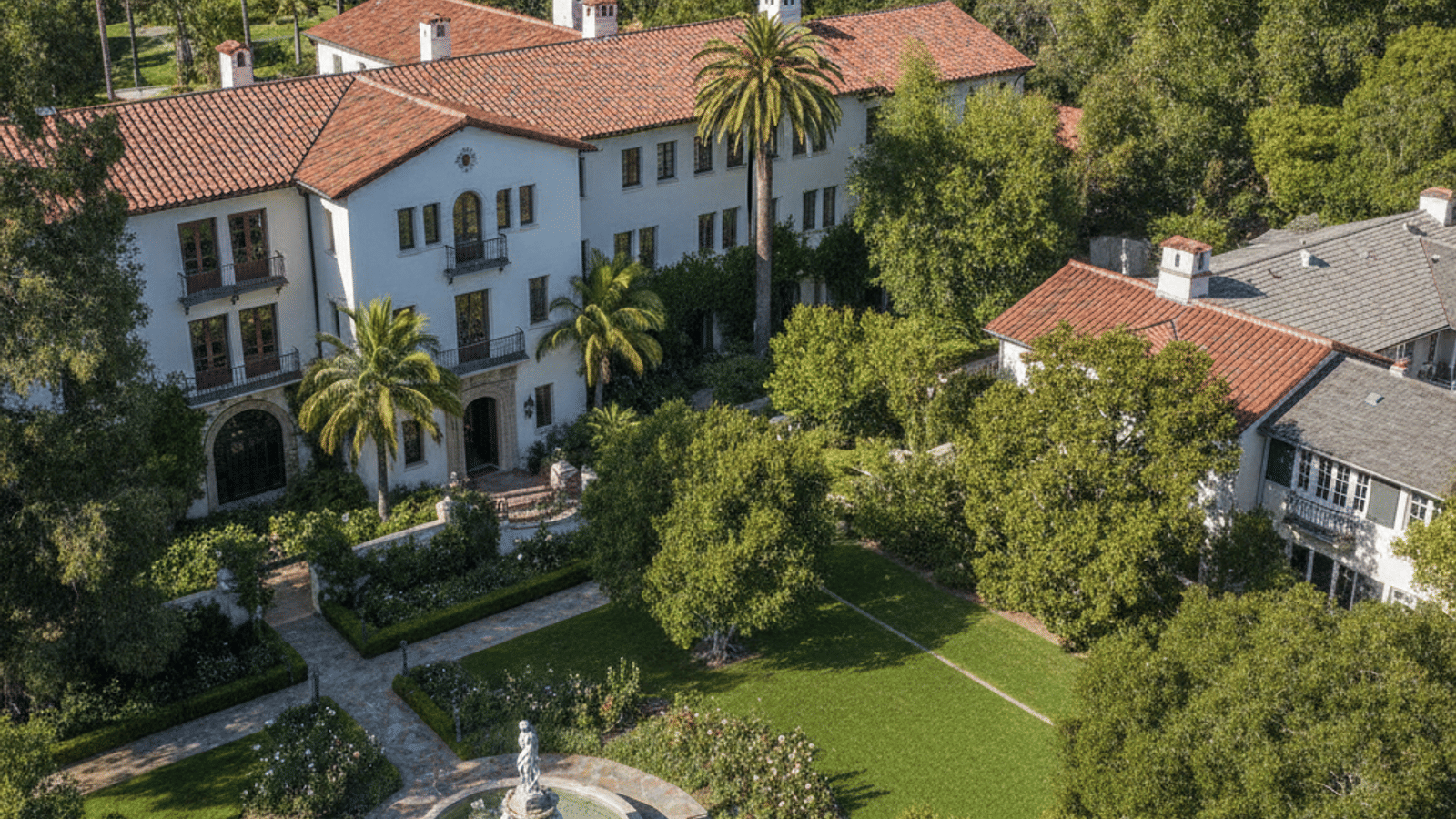
Casa Dorinda is the premier luxury senior facility physically in Montecito. The campus spans 48 acres on Hot Springs Road, anchored by a historic 1910s Spanish-Mediterranean mansion.
It provides independent living, assisted living, memory care, and skilled nursing on a single campus, with park-like grounds and amenities calibrated to a high-end resident base. There's nothing else quite like it within Montecito's borders.
Affordable and Low-Income Alternatives
No dedicated low-income senior housing exists within Montecito. If affordability is a constraint, the search has to move into Santa Barbara or beyond.
Garden Court and Gardens on Hope in Santa Barbara offer 186 studio apartments with kitchenettes for low-income seniors aged 62 and older. Harry's House Senior Community in Santa Ynez serves the same 62+ low-income bracket further out.
Expected Costs for 55+ Living in Montecito
Homes in Montecito are selling at roughly 96.2% of list price, which tells you demand hasn't softened. Senior housing costs in the area track that same high baseline.
Payment structures vary significantly depending on whether you're renting, paying a CCRC entrance fee, or purchasing outright. Factor in both the upfront costs and the annual increases in monthly fees - those increases are predictable and they compound over time.
Average Rent and Monthly Expenses
Montecito's senior apartment inventory is thin enough that isolating a precise local rental average is difficult. The working estimate for independent living in Montecito runs around $4,140 per month.
Across the wider Santa Barbara area, independent living generally starts at $2,000 per month and reaches up to $6,000 per month, depending on unit size and what's included.
Entrance Fees and Ongoing Dues
CCRCs require a substantial upfront entrance fee in addition to monthly service charges. Historical pricing for Casa Dorinda shows entrance fees ranging from roughly $138,600 to over $1,275,000, depending on the unit and the year of entry.
Monthly fees at Casa Dorinda have historically ranged from around $3,311 to $10,000. HOA fee data for other age-restricted properties in Montecito isn't readily available - the market simply doesn't have many traditional 55+ HOA neighborhoods to draw from.
Medicare and Financial Assistance
Medicare doesn't cover room and board in independent or assisted living. It pays only for specific approved medical services, short-term rehabilitation, or skilled nursing care under defined conditions.
If you're paying out of pocket for assisted living, sit down with a financial advisor to work through how long-term care insurance and personal assets can realistically cover the monthly costs.
Evaluating Montecito as a Retirement Destination
Montecito offers a coastal climate, upscale dining, and easy access to local anchors like the Upper Village - all within a quiet, residential setting that's still minutes from a larger city. That combination is genuinely rare.
The counterweight is cost. Access to specialized medical care and daily conveniences matters most for anyone relocating in retirement, and you'll want to be honest with yourself about whether the local price structure is sustainable over the long run.
Healthcare Access and Local Amenities
Montecito sits approximately five miles from downtown Santa Barbara - about a nine-minute drive. That puts Santa Barbara Cottage Hospital within realistic reach for major medical needs.
Casa Dorinda is located less than two miles from downtown Santa Barbara, with nearby addresses placing the hospital roughly 2.3 miles away, or about a four-minute drive. For emergency services and specialists, that distance is meaningful.
Overall Cost of Living Factors
A specific retiree cost-of-living index for Montecito isn't published anywhere, but a $5.7 million median home price is its own data point. Groceries, services, and everyday expenses track accordingly.
Map out your long-term budget using Santa Barbara County figures as a baseline. The question isn't just whether you can afford to move here - it's whether you can afford to stay here for decades.
Weighing the Pros and Cons of Senior Communities
Moving into an age-restricted or care-focused community restructures both your daily routine and your finances. Maintenance disappears from your to-do list, and social programming is built in.
What you trade for that is a degree of control - over the property, over visitors, over exterior modifications, over pets. These rules vary by facility, but they're real, and buyers sometimes underestimate how much they'll matter over time.
Primary Benefits
The core advantage of a CCRC or independent living facility is knowing where your care will come from if your health changes. You don't have to make those decisions in a crisis.
Financially, a single monthly fee often folds in utilities, property taxes, dining, and housekeeping. That consolidation simplifies budgeting considerably.
Potential Drawbacks
The financial barrier is the obvious one, especially for facilities requiring million-dollar entrance fees. And unlike a traditional single-family home, a CCRC unit doesn't build equity.
Monthly fees increase annually to account for inflation and rising labor costs. That's not a surprise - it's a given - and your long-term affordability calculation has to account for it from the start.
Options for Moderate and Lower Incomes
For Fiscal Year 2025, the HUD Low Income limit for a single person in Santa Barbara County is $98,850 per year. Earning over $100,050 moves a single person into the moderate-income category. The Very Low Income threshold is $61,800, and the Extremely Low limit is $37,100.
Seniors in those brackets should direct their search toward the subsidized apartment options in Santa Barbara and Santa Ynez rather than the luxury facilities in Montecito.
How to Select and Tour Local Facilities
You need to visit in person. Brochures show the best angles; an actual visit shows how the place runs on a Tuesday afternoon.
Schedule tours during active times - lunch, a scheduled social event - so you can watch how staff interact with residents and how the common spaces actually get used. A quiet building at 2pm on a weekday tells you something, too.
Questions to Ask on a Tour
At a CCRC like Casa Dorinda, ask exactly what the entrance fee covers and what percentage is refundable if you leave. Then ask for a history of monthly fee increases over the past five years. That number will tell you more than any sales presentation.
For assisted living, ask about the staff-to-resident ratio during overnight shifts - not just during the day when tours happen. And clarify which personal care services are included in the base rent versus billed as add-ons.
Reviewing and Vetting Properties
Check the facility's state licensing records through the California Department of Social Services, which maintains public records for all licensed residential care facilities for the elderly. Look for recent citations or health code violations.
Talk to current residents during your tour. Ask them directly about dining quality and how management handles complaints. That conversation will give you something no brochure will.
Frequently Asked Questions
What are the average monthly HOA and buy-in fees for retirement communities in Montecito, CA?
Specific HOA fees for 55+ communities in Montecito aren't reliably published due to limited inventory. Casa Dorinda, the local LifeCare CCRC, has historically charged entrance fees ranging from roughly $138,600 to $1.27 million, with monthly fees between $3,311 and $10,000 depending on the unit and year.
Are there strict 55+ age requirements for all luxury retirement facilities in Montecito?
Yes. Most dedicated senior facilities enforce age minimums. Communities operating under federal housing laws generally follow the 80/20 rule, requiring at least 80% of units to house someone 55 or older, though individual CCRCs often mandate that all primary residents meet a specific age threshold.
How far in advance do I need to get on a waitlist for a continuing care community in Montecito?
Casa Dorinda is the primary CCRC located directly in Montecito, demand is high, and waitlists are common. Contact the facility's admissions office directly to check current wait times for your desired floor plan.
Does Montecito have traditional active adult neighborhoods or just all-inclusive care facilities like Casa Dorinda?
Montecito primarily features the all-inclusive CCRC model through Casa Dorinda. Buyers looking for traditional 55+ active-adult neighborhoods or mobile-home communities will need to expand their search into the broader Santa Barbara area.
How do retirement communities in Montecito compare in price and amenities to those in neighboring Santa Barbara?
Montecito offers ultra-luxury options on expansive grounds - Casa Dorinda's 48-acre campus with a historic 1910s mansion, for example. Santa Barbara provides a wider range of price points, including independent living facilities with rents from $2,000 to $6,000 per month, plus low-income options for those qualifying under the county's $98,850 income limit.
Can I use California Proposition 19 to transfer my current property tax base to a retirement home in Montecito, CA?
It depends on the facility type. Proposition 19 applies to the purchase of a new primary residence, so it may work if you buy a home in a 55+ neighborhood - but it doesn't apply to rental apartments or CCRC entrance fees where you don't hold the deed to the real estate.
Check out this article next